

FamilySearch and the DAR
This week the Daughters of the American 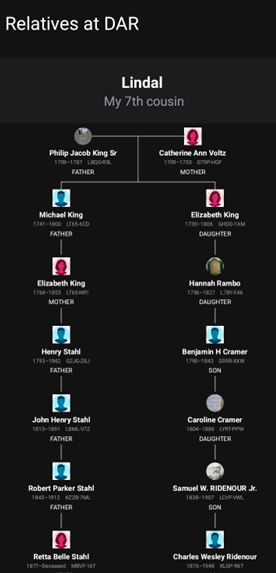 Revolution (DAR) convene for their 133rd Continental Congress. Working with FamilySearch, the organization has designed an experience that lets members discover family relationships with other DAR members and make personal connections with them.
The feature created a buzz when it was introduced a year ago. Members do not have to be present at the national meeting in Washington, D.C. to participate. All that’s needed is for them to create a FamilySearch tree by adding living and deceased relatives as far back as they can. (Living family members are not visible to others.) FamilySearch identifies matches and shows how one is related to other DAR members.
My closest relative so far has been a 4th cousin, which admittedly is not that close, but the list of matches continues to grow as more members join the fun. This morning when I queried the app, I was happily surprised to see “Lindal,” a good friend and fellow member of the Lake Minnetonka DAR Chapter. A full comparison of how we match was immediately available--nine generations back to our common ancestors, Philip Jacob King Sr (1709-1787) and his wife, Catherine Voltz (1709-1755).Shown at right are truncated family trees that begin (or end?) with my grandmother, Retta Belle Stahl (1877-1961), and Lindal's grandfather, Charles Wesley Ridenour (1876-1948).